
Empowerment for Young People (E4YP) Project
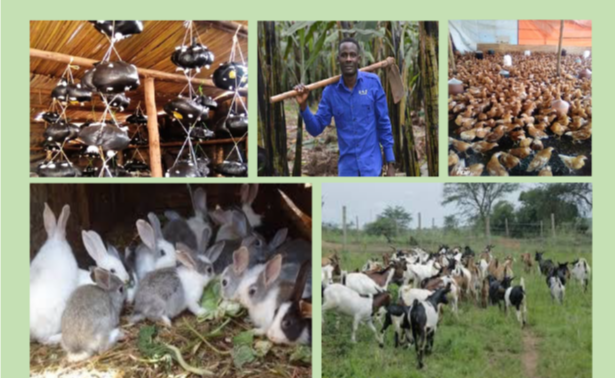
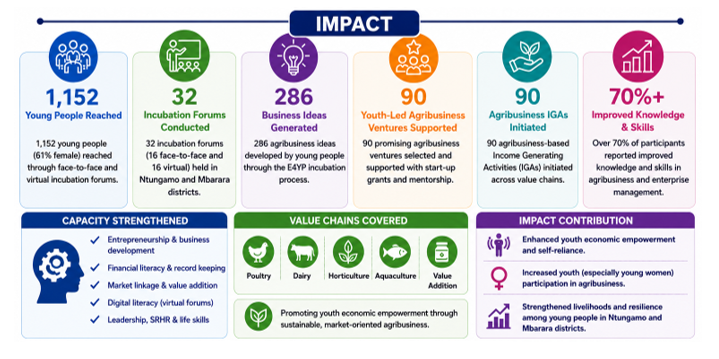
From 2020 to 2022, CCEPO received funding support under the SRHR Umbrella Innovation Fund to implement both face-to-face and virtual incubation forums in Ntungamo and Mbarara districts, following CCEPO’s E4YP Incubation Forums model (Manual). The initiative aimed to stimulate and nurture innovative ideas for agribusiness-based income generating activities (IGAs) and promote resilient livelihoods among out-of-school vulnerable youth and young key populations.
The incubation forums benefited 200 young people aged 18–24 years, who received direct support to develop skills for creating and implementing their own business ideas. Of the beneficiaries, 60% were female and 40% were male. In consultation with peer leaders and other stakeholders, CCEPO identified and profiled 20 local role models—individuals who had successfully operated enterprises or IGAs—to serve as mentors and motivational speakers during the incubation forums. CCEPO organized a series of face-to-face incubation forums, while adhering to COVID-19 guidelines, where beneficiaries interacted with role models, learned from their personal experiences, and received guidance on how to establish their own IGAs. A total of eight face-to-face incubation forums were conducted, each engaging 25 participants.
During the forums, participants were provided opportunities to visit enterprises operated by the role models and received hands-on training. The training also encouraged incubates to reflect on their identities as women and girls, boys and men, examine prevailing gender norms, explore how men and women related to one another, and assess the fairness of such dynamics. The E4YP incubation forums promoted gender equity and supported incubates in exploring ways to foster more equitable relationships in their daily lives. At the conclusion of the face-to-face incubation forums, incubates who had generated promising business ideas were linked to existing government and private-sector apprenticeship programmes to further nurture their ideas and acquire practical skills and experience. Those who decided to actualize their business ideas were supported with seed funding.
The incubation process subsequently continued virtually through WhatsApp groups that were established according to the type of IGA, including poultry, piggery, aquaculture, and horticulture. Role models were assigned to relevant groups based on the nature of their enterprises to continue providing guidance and mentorship to the incubates. Audio-visual and print materials developed on various IGAs were uploaded to the respective WhatsApp groups to support ongoing learning. Enrollment into the WhatsApp groups was guided by predetermined criteria and participants’ interests in specific IGAs.